RSS

The City of Alexandria, Egypt

The City of Alexandria, Egypt

The Building of Alexandria

The second largest city in Egypt, Alexandria, known as "The Pearl of the Mediterranean", has an atmosphere that is more Mediterranean than Middle Eastern ; its ambience and cultural heritage distance it from the rest of the country although it is actually only 225 km. from Cairo.

Founded by Alexander the Great in 331 BC, Alexandria became the capital of Graeco-Roman Egypt, its status as a beacon of culture symbolized by Pharos, the legendary lighthouse that was one of the Seven Wonders of the World. The setting for the stormy relationship between Cleopatra and Mark Antony, Alexandria was also the center of learning in the ancient world. But ancient Alexandria declined, and when Napoleon landed, he found a sparsely populated fishing village.

From the 19th century Alexandria took a new role, as a focus for Egypt's commercial and maritime expansion. This Alexandria has been immortalized by writers such as E-M- Forster and Cavafy. Generations of immigrants from Greece, Italy and the Levant settled here and made the city synonymous with commerce, cosmopolitanism and bohemian culture.

Alexandria is a city to explore at random. It's as important to enjoy the atmosphere as it is to see the sights.

Old Alexandria

Dinocrates built the Heptastadion, the causeway between Pharos and the mainland. This divided the harbors into the Western and Eastern. The Eastern harbor was really where the old harbor from the Middle Ages was located.

Of modern Alexandria, the oldest section is along the causeway which links what was once Pharos island with the mainland and includes the districts of Gumrok (the oldest dating to about the 16th century and known as the customs district) Anfushi, and Ras el-Tin (Cape of Figs). The latter two districts date to about the period of Mohammed Ali (1805-49). Collectively, these districts are known to westerners as the Turkish Quarter. They have had a number of ups and downs over the years, particularly due to the plague during the 17th century. The area forms somewhat of a T-shape, dividing the Eastern Harbor from the Western Harbor.

This section of Alexandria is known to us more from books then what we may actually see in the area. Where the Pharos Lighthouse once stood, is now occupied by the Fort of Quit Bay (1) out on the area that circles up around the top of Eastern Harbor forming the eastern section of the top of the T. Heading south from the Fort of Quit Bay, we come to the stunning Abu El-Abbas Mosque (2). West of this is the Anfushi Tombs (3), some of the oldest in Alexandria and well worth a visit.

Central Alexandria

The Underwater Discoveries


The Underwater Discoveries

Relatively new discoveries in the Eastern Harbor involve two different sites. Around Fort Qaitbey the site has unearthed hundreds of objects, including what experts believe are the remains of the Pharos Lighthouse, one of the ancient wonders of the world In the south east part of the harbor archaeologists have apparently found the Royal Quarters, including granite columns and fabulous statues, including one of Isis and a sphinx with a head thought to be that of Cleopatra's father. There may vary well be an underwater exhibit in the future.

Heading towards the mainland past the Abu El-Abbas Mosque and connecting with Shari Faransa street leads to the Suq district. Just before entering the district one finds the interesting little Terbana Mosque (4). In the Suq district (5), one finds Alexandria's only surviving wakalas, which is a part of the El-Shorbagi Mosque complex founded in 1757. This was also the area where Alexandria's Jewish community lived, but most have now migrated to Israel. Different areas have specialized in different goods and one may find all manner of products from jewelry to Medicinal plants (Suq El-Magharba) to Bedouin clothing (Suq El-Libia).

Continuing down Faransa one passes Midan Tahrir (6) and the street turns into Salah Salem, and finally connects with Al-Horreya.

However, Midan Tahrir, popularly called Manshiya, has considerable history. The areas was once home to Diplomats and known as Place Des Consuls, but after the statue of Mohammed Ali was placed here in 1873 the name was changed to Midan Mohammed Ali. In 1882, it was bombarded by the British and all but destroyed. The Alexandria Stock Exchange was once located here, and it was from the midan that Nasser announced the nationalization of the Suez Canal.

The street named Al-Horreya (Tariq abd el-Nasser) which transverses the area from east to west was in ancient times the Canopic Way with the Gate of the Sun at the eastern end and the Gate of the Moon at the western end. At that time, there were probably columns lining the road. The main north to south street, now Sharia el-Nebi Daniel, ran from the East Harbor all the way to Lake Harbor on Lake Mariout.

Just south of the intersection of Al Horreya and el-Nebi Daniel was the site traditionally thought to be the burial place of Alexander the Great, but that has not been located, and may in fact be beneath the Mosque of Nebi Daniel (7) or in a nearby Greek necropolis. The famous Alexandria Library was probably nearby. However, the only real antiquities site that can be viewed in the area is Kom el-Dikka (8), a small Roman theater that has been excavated. Nearby is also a bath house of the era. To the east is the Antiques District where dealers sell antiquities, books, old weapons and furniture. Here is also the Attarine Mosque, which was once a church dedicated to Athanasius.

Further south along the tramway is Pompey's pillar (9) and nearby the Catacombs of Kom ash-Shuqqafa (10).

Wondering along el-Nebi Daniel are several other attrations, including the French Cultural Center, and nearby the Eliahu Hanabi Synagague (11), which is the only active synagogue in Alexandria and houses the combined treasures of the seven former Alexandrian synagogues.

Back to the north on el-Nebi Daniel, next to the harbor where Ramla station is now located at Midan Saad Zaghlul was the location of the Caesareum (12). This was a magnificent temple begun by Cleopatra for her lover Antony and subsequently completed by their enemy Octavian, though none of this remains.in situ. Nearby is the well known Cecil Hotel, built in 1930, Smerset Maugham stayed here, as did Winston Churchill, and the British Secret Service one maintained a suite for their operations.

Midan Saad Zaghlul (13) is the entertainment heart and nerve center of Alexandria. here, as terminals and train stations provide a backdrop for cinemas, restaurants and night spots. It was the setting of Lawrence Durrell's Alexandria Quartet and the famous Alexandria coffee houses. The square is dominated by an impressive monument dedicated to Saad Zaghlul, a former national leader.

The Greek Quarter and Bab Rosetta District

Back on Al Horreya heading east, as we pass the Graeco-Roman Museum (a notable museum well worth a visit) we move into the Greek Quarter of Alexandria, one of the most beautiful residential districts. The wonderful old villas include the massive Miclavez building, which is opposite the Town Hall and nearby the Adda Complex built in 1929. This is where the wealthy Greeks lived at the turn of the century, and the streets are still named after the Ptolemic, Pharaonic, Abbasid and Fatimid rulers. Further east is the Greek Orthodox patriarchate andthe Church of St. Saba.

Further east, Al Horreya opens into a beautiful green area known as the Shallalat Gardens, which was once the fortification of Bab Rosetta. But in 1905, Alexandria created a garden area here with waterfalls and the only Alexandria cistern which can be viewed. This cistern is an example of those which once dotted Alexandria providing fresh water to her inhabitants.

The Corniche

The Corniche is doted with Casinos built on stilts and rows of beach huts. The avenue here did not always exists, for until the 20th century, the areas remained fortified by a five mile long wall with towers which had protected the city since the 13th Century. In the early 1900s, a strip of land with a width of about 100 years was reclaimed from the sea, and the area became popular with beach goers. That is no longer the case, but it remains a lively area of Alexandria.

On the western end of the Corniche near Silsila where the New Alexandria Library is being constructed is the Shatby Tombs which are said to be the oldest in Alexandria. Nearer the San Stefano area across the tram tracks is also the Royal Jewelry Museum.

The Mahmudiya Canal

A walk along the Mahmudiya Canal brings one face to face with the working class and industrial districts of Alexandria, and is pleasant along the old paved road bordered by the canal and sycamore trees. South of the Greek district along the canal is the Antoniadis Gardens, which seep with history. Here, the poet Callimachus lived and taught, and in 640 AD, Pompilius prvented the King of Syria from capturing Alexandria. But less then a year later, Amr Ibn el-As camped here, before taking the city. The well known Water Traffic Circle is also in the area.

Here one finds the Zoological Gardens, the small Museum of Natural History and the Fine Arts Museum in the Moharrem Bey area, and a Rose Garden. The beautiful public gardens extend into the surrounding area where the Antoniadis Palace is located, and there is even a nearby Roman tomb.

El-Muntaza

Muntaza Gardens

This area along the coast about 15 miles east of Alexandrias old district along the Corniche is where many of the modern Alexandrian hotels are located, as well as one of the elegant heritage hotels. Khedive Abbas II built the Salamlik as a residence. Here also is the magnificent Montaza Palace.

The Gates of Alexandria

Temples of Egypt

Temples of Egypt


Writing an introduction to ancient Egypt temples is considerably more difficult then examining any specific structure, for a number of different reasons. First of all, the term "temple" is misleading, and secondly, the term covers a huge variety of different structures that evolved over such a vast period of time that many people have a difficulty comprehending just how long a time this period spans.

The Ramessuem on the West   Bank at   Luxor (Ancient Thebes)

The Ramessuem on the West Bank at Luxor (Ancient Thebes)


For example, think of the Roman Coliseum (in Rome). It is almost 2,000 years old, and most of us would think of it as very ancient. Yet, when the Romans first came to Egypt, they were awe struck by Egyptian temples, some of which at that time were already more ancient to the Romans, then the Roman Coliseum is to us. So we must consider the effect that these temples had on the ancient Egyptians. Imagine the feelings of old tradition and holiness felt by a young priest when he first enters St. Peter's Cathedral in Rome. How must a young Egyptian priest felt as he strolled the courts of the much more temple of Heliopolis, which was much more ancient to him then St. Peter's would be to a young priest of today.

Webster's New World Dictionary defines temple as "1. a building for the worship of god or gods, and 2. A large building for some special purpose". For the second definition, they provide the example, "a temple of art". Neither of these definitions fit the ancient Egyptian temple very well, and yet, almost every religious structure in Egypt outside of the various types of tombs are almost always referred to as temples.

Certainly some of these "temple" structures do embrace both of Webster's definitions. In fact, it is difficult to imagine most any large, ancient building not falling under the second definition, including palaces and governmental buildings. However, our modern readers are more likely to think in terms of the first definition, that of a temple being a place of worship. However, this definition is simply too limited to fit even the structures that many modern Egyptologists better define as a "god's mansion". Even these temples sometimes had many other functions, acting sometimes as fortresses, administrative centers and even concrete expression of propaganda or royal retreats. However, it is difficult to define some other religious structures that are called temples as houses of worship or "god's mansions". They may have other political or all together different purposes.

It was the ancient Egyptian temple that received endowments. It was the mortuary temple and the cult of the dead king that funded the entire pyramid complex of the early kings, for example. Temples owned land, livestock and received donations, sometimes including the spoils of war, in order to support often large populations of priests, workers, and sometimes even an entire support town.

The Temple of Karnak at   Luxor

The Temple of Karnak at Luxor


The Temple of Karnak today remains the worlds largest religious structure, but what is perhaps even more interesting is that it might not have been, or indeed was probably not Egypt's largest temple. Certainly the Temple of Ptah in Memphis, though for the most part completely gone today, may have been larger. It was older, and located in what was often the capital of Egypt, and more often the administrative center of the ancient country. Other temples in the Nile Delta might have been just as large as Karnak, if not larger.

Sites such as Karnak, Dendera and Kom Ombo would most likely fall under the category of "god's mansion". They were more then religious "temples" however. While the god may certainly have been worshiped in these temples, it was also his symbolic home, if not considered his physical residence, and the functions of the temple were as much to serve his or her symbolic physical needs as they were for the god's worship. There was probably little or no "preaching" as such, or carrying the message of the god to the people by priests associated with these "temples". Rather the efforts were directed inward, towards the care of the gods.

Also, though we often make a very specific distention between mortuary temples of kings, for example, and temples such as Karnak, they were actually very similar. Kings were considered gods, and after their death, they required a "mansion" and the same attention as other gods. Both regular and mortuary temples served to keep the name of the king or god alive.

A temple on the West Bank     at Luxor


Temple of Dendera

Temple of Dendera


The real distinction, religiously, seems to be in regards to structures that might not so easily be defined as "god's mansions". Nefertari's temple at Abu Simbel was certainly dedicated to the goddess Hathor, it would seem. But this also seems to be a situation where a "god's mansion" was built as much for political as for religious purposes. These great monuments at Abu Simbel, consisting of her temple, and the larger temple of her husband, Ramesses II, were not just temples. They were also reminders of Egypt's greatness to her southern neighbors. Other structures hardly fit within the "god's mansion" category at all. For example, Sed-festival Temples that celebrated the king's jubilees seem to have had a completely different purpose than "god's mansions", and ka Temples provided a residence not to the dead king, but for his soul.

Nevertheless, for convenience, we will refer to most religious structures other then tombs as temples in the remainder of this reference.

Dynastic era temples may be found throughout Egypt, though the ones that have survived time are mostly in the south. They were built for many different forms of worship, as well as other purposes. Some were major temples dedicated to major deities, while others were dedicated to a number of different deities. Some were mortuary temples, where the temple was dedicated to the deified dead king, and where he was worshiped and cared for by his cult. There were also valley temples, which were often no more then monumental gateways connected to the king's mortuary chapel by a causeway. There were all manner of specialized temples, such as Sed-festival temples, ka temples, sun temples, coronation temples and others.

Many of Egypt's temples became complex systems of buildings, added to by generations of pharaohs over sometimes thousands of years. Such temples include those of Luxor and Karnak, but others long destroyed, such as the Temple of Ptah. In fact, there are any number of northern temples, though long gone, that would have rivaled the southern temples that we most often visit today.


Most Temples had some sort of organized structure that evolved into a traditional, if somewhat varied floor plan. For example, the mortuary temple of 5th Dynasty kings invariably had an outer section and an inner sanctuary. The outer section would consist of an entrance corridor, followed by an open columned courtyard. Often, the pillars were inscribed with the king's name and title, and the northern columns would have scenes oriented to northern Egypt's symbolic gods, with a similar arrangement on the southern columns. Various additional minor chambers might also exist within the outer section, including, for example, an entrance vestibule or a guard station. Between the outer temple and the inner section there was usually a transverse corridor, and in the center of the long, west wall a doorway lead to the inner sanctuary of which the front section consists of a chapel with five niches for statues. Behind the chapel would be an offering hall, notable for a false door on the west wall that faces the pyramid, and before the door, an offering altar. Within the inner sanctuary there might also be additional rooms, such as vestibules and antechambers. Associated with both the outer and inner sections of the temple would be storage and other annexes to one side or both of the main temple components.

Non-mortuary temples often also had courtyards, chapels, offering halls, vestibules, antechambers, just like the mortuary temples. They tend to vary considerably in their style and elements, though temples built for specific gods tended to be more uniform (though not always). One of the major differences between mortuary temples and others was that the non-mortuary temples were very often added to, built upon and even usurped by various kings. Though in rare cases a mortuary temples, such as that of Djoser at Saqqara, became places of high holiness, and were built upon by later kings, most mortuary temples were never added to or usurped. They therefore most often were much more simple than major non-mortuary temples.

Latter temples took the form of fortresses, with massive entrance pylons and enclosure walls, huge courtyards, columned or pillared halls and inner sanctuaries.

Construction in Ancient Egypt

Construction in Ancient Egypt

by The Egyptian Government

Construction in Ancient Egypt

There is consensus among historians and Egyptologists that the ancient Egyptians were the first builders ever known to man; they taught humanity how to design and erect buildings; thus laying grounds for human civilization, urbanization and man's settlement in a specific homeland of his own for the first time in history.

Great achievements with simple tools

Ancient Egyptians actually reached unmatched high levels in architectural design and construction engineering. Even at present it is still hard to conceive how they could have all these buildings and structures erected with such high level of perfection and precision, using only primitive and naive tools far incomparable with modern machinery and equipment. Even a layman would think that ancient Egyptians' knowledge of theoretical and applied sciences was as advanced as ours today. However, their knowledge was purely experimental and their tools so simple. These mainly consisted of a builder's thread to delineate vertical lines, an angle, a measuring arm (52cm-long) and a straight edge. With these primitive tools, however, they could make schematic drawings, plans and cross-sections for their colossal but very fine structures that still astound the world. Looking at the existing Pharaonic monuments, we should keep aside our conception of today's technological advancement. At that early time in history, stone blocks were molded with solid stones, copper or bronze tools. Courses of block work, column bodies and crowns, beams and ceilings were hoisted to the required level over mud and earth ramps up to the top of sand heaps adjacent to walls. Lifting devices used consisted of wooden gliders, rollers, ropes and levers. Well-trained teams of workers rowed stone-carrying boats across the Nile, then pulling the huge boulders overland to their destination. The process demanded backbreaking efforts and considerable endurance and patience on the part of huge numbers of workers and other staff, working in harmony and unison. Undoubtedly this was a significant success factor for ancient Egyptian architects.

Construction in Ancient Egypt

At present, one can easily appreciate the aesthetic and artistic value of ancient Egyptian temples and tombs with their copious ornaments, mind-boggling artistic elements carved out with exceptional creativity. Ancient Egyptian buildings reflected builders conception of things as well as the needs of the society. In building their tombs and temples, ancient Egyptians put to good use their wealth of knowledge and creative genius; almost in the same way modern nations focus their attention on improving their technological and professional capabilities. With ancient Egyptians, construction was an unceasing practice. Under the reign of the one and same king, and often several times, houses of deities were rebuilt or expanded, with mural decorations refurbished or completed under orders of the king, whose duty was to have temples erected or renovated.


Construction and Religious Rituals

With ancient Egyptians, construction was inseparably associated with religious rituals. Temples and tombs figured high within the main religious rituals. Certain ancient Egyptian words were used to describe architectural drawings, foundations and construction works well as the purpose of religious building. Indeed, buildings themselves with their form and decorations were stone incarnation representations of religion and rituals. According to ancient Egyptians beliefs, such buildings, made of very solid materials, had the power of giving life through the magic of simulation in this world and immortality in the after life, even if no religious rituals were performed there. According to some texts, a temple, with its contents, is a miniature of the world of the dead. Accordingly, certain parts of the tombs were shaped like houses and temples.

The pyramid may be compared to the first hill where the sun was first born and the corridors of the Valley of Kings to those existing in the nether world. Construction supervisors and scholars in charge of the rituals as well as master builders used to perform magic rituals ordered by the royal decree to erect royal tombs and temples. Pursuant to royal permission and with due regard for all prevailing conventions and the nature of the land, as well as astrological considerations; they could define the orientation and location of the building. Meanwhile, technical aspects and rituals required for the construction process were prepared. Visible components such as architectural and construction works were as important as invisible ones such as burial of offerings and sacrificial animals and re-using rocks carved out of other sacred places. In fact, ancient Egyptians used funerary inscriptions and scenes of religious rituals and afterlife mainly for religious purposes rather than for mere decoration. Inscriptions and paintings were laid in endless rows on the walls of temples, courtyards, and rooms depending on their religious use. Examples included stars portrayed on ceilings, swamp lotuses on ceiling cornices, solar snakes, celestial eagles, with rows of water and land spirits below. The famous Egyptian cornice on top of doors, temple gates, towers and rooms were stone geometrical forms of stone, while sets of inscriptions on the upper parts of temple walls were replicas of arches earlier used. With such astounding genius of harmonizing materials, location, paintings and ornamentation with worldly needs and religious rituals, the ancient Egyptian architect could create magnificent symmetrical and highly impressive masterpieces.

Building and the Status of Stone

Ancient Egyptians used two words for stones; one to denote precious stones, such as turquoise and emerald brought in small bags from eastern mines, red carnelian from Nubia and lapis lazuli from Asia.

Semi-precious stones were used most adroitly in making amulets or inlaid into wood or gold. The other type was stone blocks used by sculptors and builders. These were found in plenty, especially lime stone. Rough stones were used in building interior walls and foundations, while fine stones, cut out with special care, were used in decorating main walls or erecting colossal temples. Yellow limestone was brought from Al-Silsila Mount, white limestone from Tura, and gray or red granite from Aswan and alabaster from central Egypt. The temple of Ramsis I, where almost all these types of stone were used, is the best illustration. Basalt was often used in paving roads and laying lower courses of buildings. Generally, the above-mentioned stones, in addition to diorite, marble and porphyries were used in making statues and utensils. Convertible diorite was used in making the famous Chephren statue. Many scarabaeuses and other objets d'arte were made of soft steatite.

Pharaonic Creativity

Using robust copper or bronze chisels, Ancient Egyptians not only carved out limestone but also molded the hardest of rocks and stones and inscribed their fine hieroglyphics on them. Long before circa 4000 BC, their ancestors of the Modern Stone Age made beautiful utensils with only very simple tools.

Before the Iron Age, Ancient Egyptians had no steel tools to use in consummating such works that can not be made at present without special tools such as power drills. In this context, anthropologists argue that although working methods used by ancient Egyptians were slower and harder, they were no less effective than ours today. Studies of remaining ancient tools and illustrations of sculptors at work show that their working modalities were as follows: The overall design was made, using a global-shaped hammer of more solid stone, then cut with a saw and sanded out. Stone was carved with pointed-end tools and drilled with a tool counterpoised with a bag of pebbles. Cutting devices were made of hammered copper sharpened with an abrasive material like modern sandpaper.

It is worth mentioning that, trying to imitate ancient Egyptians, a young French artist attempted to use hammered copper in carving granite, but failed. However, he succeeded in creating precisely imitated pieces by using flint tools in granite sculpture. This may be the starting point to get more precise knowledge of the ancient Egyptian sculpture and to revive the ways of the great ancient Egyptians who showed the whole world how the art of sculpture and building should be.

Evolution of Pharaonic Architecture Ancient Egyptians knew how to fortify their cities and to surround their tombs with mud bricks and to build roomy temples; for almost in 3200 BC, ancient Egyptians started using sun-dried mud bricks on a large scale; a practice that persisted for long. However, the temples of the most famous deities were built with beautiful stone to stand time. However, in 2800 BC, a genius architect called Imhoutep thought of using stones in building premises of secret rituals where people lived in life and afterlife. Years after years many generations of skillful builders invented new architectural styles. They improved the style of building the pyramids and temples by using more stone blocks. The Old Kingdom witnessed setting of features, styles and decorations of ancient Egyptian architecture.

Most famous ancient Egyptian buildings

The pyramids

The pyramids have the deepest impression on the whole world's imagination. They are the greatest and most famous structures ever in human history. The extraordinary great pyramid was built by Cheops, son of Snefro. It covers an area of 13 feddans with an original height of 146, of which 9 meters at the top were lost. The four angles of the pyramid tilting at 51 and 52 degrees, face the original four directions.

Construction in Ancient Egypt


It was coated with a bright layer of which only some traces still remain. The only entrance of the pyramid is located to the north side at a 16 meters height. The burial chamber, where the sarcophagus of the king lies bare, is made of granite. The ceiling of the chamber consists of nine granite blocks weighing some 400 tons. Above, there lie five separate niches, of which four have flat ceiling, while the upper one has a slanting one to avoid collapse under the weight of the overlying building.

Fortresses

Skillful ancient Egyptians later devised more sophisticated methods for transporting earth and stone to build defense structures. Through out Pharaonic eras, sensitive border were secured by strong defense means. From the early dynasties onward, royal palaces were surrounded with high clay walls erected around the outer courtyards of the tombs of princes in later eras. Other examples include Zoser wall in Sakkara and walls around certain sarcophagi. Oval-shaped fortresses were built with round supports in the same style used in earlier epochs. During the Middle Kingdom, more sophisticated defenses were erected, consisting of huge 5-6 meter-high, mud brick castles with dual walls, barriers and terraces and sometimes with mobile towers and trenches. Fourteen fortresses were ingeniously built on the islets and mountains lying between the first and third cataracts on the Nile by Snosert III, conqueror of Nubia. Another manifestation of this style can be seen in the Prince's Wall, built by Amnemhat I in Al-Tolombat Valley to fend off Asian invaders. Probably, that style of fortress building may be the origin of the myth widely circulated up to the time of the Arab conquest of Egypt, that an ancient Egyptian king had built a defense wall extending from Al Farama in Sinai to Heliopolis. To a large extent, the fortifications built by ancient Egyptians in that area are much similar to the Great Wall of China. Later, when ancient Egyptians conquered Asia during the Modern Kingdom, they adopted the common Asian fortress design known as the Migodol. This was almost similar to the European castles of the Middle Ages, with the outer walls fitted with arrow shooting ports and small towers. On the other hand, the gate of the temple of Ramsis II in Habu was only a replica of the Asian-Syrian-style fortress. Since time immemorial, Egyptian fortresses were totally invulnerable.

Edfu Temple

Edfu was the capital of the second region in Upper Egypt. It was a city of great importance and prosperity during the Old Kingdom. It owes its fame to a spacious Ptolemaic temple, one of the most famous religious monuments in Egypt. The 137-m-long, 79-m-wide and 36-m-high temple is still exceptionally almost intact, with its hall, columns, stairs and ceiling still maintaining their original state. In addition, its colors and decorations still look fresh. It is not even hard to imagine how all these looked like at the peak of their glory. At the entrance, there lie two obelisks in front of the entrance with statues in the courtyard. The hall of columns look so live that a visitor may think he will soon see priests with their immaculate robes strolling around the place.

Karnak Temple


Construction in Ancient Egypt

"All I have seen in Thebes and all I have strongly admired on the west bank of the Nile was by no means comparable to the Karnak. No people, ancient or modern, had thought of art or architecture in such a superb and extensive scale or with such grandeur as the ancient Egyptians did. They made me think of people each 100-feet-tall," said Champillion. Al Karnak temple itself is a world where one may get totally lost. In order to perceive the overall system of these mind-boggling buildings, one should climb to the top of the first edifice built there. In front of the Temple, there lie the grand court of the Ethiopians and Sheshanq Gate. At the back there lies the great roofed hall built by Ramses, followed by Hetshepsut's obelisk and Thohomous' granite temple and ceremonial hall. In the background, there lie the eastern gate, with the Sacred Lake, ruins of Osiris tomb, the temple of the infant deity Khonso, faced by Eurgetes edifice and Opit temple.

Obelisks


Construction in Ancient Egypt

Sanctification of obelisks dates back to the pre-dynasty period. The architectural use of obelisks all over ancient Egypt took its origins in Heliopolis especially during the Modern Kingdom. Ancient Egyptians used to build two obelisks, one at each side of the temple gate. In certain cases when the sun cult was restored, a single obelisk was erected at the center of the temple. An example of this design can be seen in the sacred stone in Heliopolis. Those obelisks with vertical sides and tilted pyramidal-shaped caps were reminders of the sun cult. Made of red Aswan granite, very little is yet known about how those structures were carved transported or erected. One obelisk could weigh hundreds of tons; the biggest unfinished one, still lying at its quarry in Aswan, weighs more than 1000 tons. At present, only five obelisks still survive in Egypt while more than 50 ones stand in the main squares in capitals of Europe and USA. On the 30th anniversary of building the Aswan High Dam, the international Dams Commission, selected the Aswan High Dam as the best hydraulic and engineering project in the 20th century This was the result of a study conducted over three years by a panel of prominent dam experts, involving a comparative analyze of 120 international dams all over the world. Although, the Aswan High Dam is not the highest and biggest in the world, yet, it is next to none, in terms of economic advantages in the fields of agriculture and industry, electric power generation, fish wealth development and protection against floods and draught. This international testimony proves that the Aswan High Dam is the best in the world

Tours in Romania

Tours in Romania

At your request: Real Dracula Tour - Places where Dracula ( VLAD- The Impaler ) lived!

A 4X4 that gives you total control while driving across all terrains. Toyota Land Cruiser (6+1 seats) - The ideal 4X4 for the adventurer touring in Bucharest's surroundings and the rest of romanian allroads.

The Land Cruiser resembled the Willys when it began production after WWII. While this "yota" was discontinued in the mid 80s, it lives on in the hearts of those who own her and can still create stories for those who adventure the Land Cruiser offroad.

You can enjoy the cross country travelling also by a Mercedes Viano (MPV) - 6 +1 seats driven by a holiday private driver.

Prahova Valley Tour (1 or 2 days trip) - extended to Sighisoara

Please let us know, via e-mail or by phone, if you are interested in this package. We'll try to give you our best offer!!

Peles Castle - the pearl of royalty in Romania. Bran Castle, located up on a hill between the Bucegi and Piatra Craiului Mountains, 30 km far from Brasov, is the only touristic point that attracts hundred thousands tourists because of a legend: Count Dracula's Legend, although the historical sources state that Vlad the Impaler dropped by only once, in his way to Brasov. Brasov - Black Church (Biserica Neagra).In Azuga- Prahova Valley can be visited Rhein Domain- champagne suppliers of the Royal House . The last stop will be Sighisoara, the birthplace of Vlad the Impaler, one of the most well-preserved medieval citadels in Europe.

Moldavian Monasteries Tour (3 to 6 days trip)

Please let us know, via e-mail or by phone, if you are interested in this package. We'll try to give you our best offer!!

The impressive number of churches to be found in Bucovina - Romania, with their fine exterior and interior frescoes, have been preserved and handed down from mediaeval times, and because of their uniqueness and artistic value, were added to UNESCO's World Cultural Heritage List in 1993. There is, indeed, no other place in the world where such a group of churches, with such high quality exterior frescoes, are to be seen. That's why Romania it's been considered one of the most blessed places in Europe. The churches were founded, in most cases, as family burial places of kings,princes and high nobles. Each painter, although following the canonical iconographic programm, interpreted the scenes in a slightly different way. Using colors like the famous blue of Voronet , the green-red of Sucevita, the yellow of Moldovita, the red of Humor and the green of Arbore, the painters (most of them unknown) described the biblical stories of the earth and heaven, scenes from the lives of the Holly Virgin and Jesus Christ or Apostols, stories of man's beginnings and of his life after death.

Wooden Churches in Maramures (7 days)

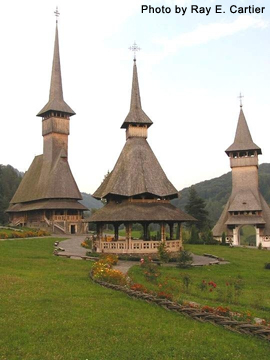
Church Please let us know, via e-mail or by phone, if you are interested in this package. We'll try to give you our best offer!! The wooden churches are a distinct feature of Maramures. Here the natives' woodcarving talent shows up in a display of beauty and creativity. These churches are built in the 17th and 18th centuries without the help of any iron nails, yet reach impressive heights. In fact, here you will find the highest wooden building in Europe (some say in the entire world) - the church of Surdesti, reaching 72 m (236 ft).

Some of them have been listed by the UNESCO as a World Heritage Site in 1999, for their religious architecture and timber construction traditions.

Danube Delta - a unique reservation in Europe ( 2 or more days trip)

Danube Delta Please let us know, via e-mail or by phone, if you are interested in this package. We'll try to give you our best offer!!

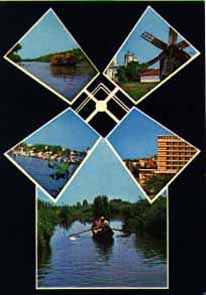
The Danube, the only river on Earth that passes through 10 countries and four capitals flows into the Black Sea via the Delta which covers, together with Razelm Sinoe lagoon complex, about 5050 square kilometers, of which 732 square kilometers are in Ukraine. In 1991, it became part of the UNESCO patrimony, being the only delta in the world that is declared a Biosphere Reserve or a birds paradise.

Black Sea Coast - Romanian Riviera (1 or 2 days trip)

Please let us know, via e-mail or by phone, if you are interested in this package. We'll try to give you our best offer!!

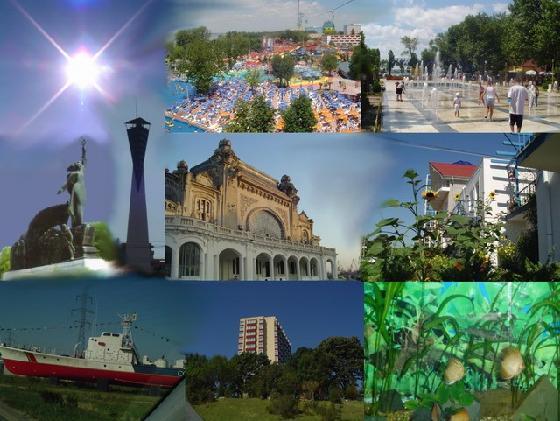
Constanta The seaside of Black Sea is marked by the limits of Midia Cape and Vama Veche. The Romanian seaside of Black Sea, also over named "Romanian Riviera", extends on a 245 km length. Mamaia sea resort is a popular destination in summertime for romanians and foreign tourists, as a result of a major tourism investments programs. Other important sea resorts are: Neptun, Venus, Saturn, Jupiter, Olimp, Eforie. The antique greek and roman ruins lay at Adamclisi, Histria, Callatis etc.

For Connaisseurs - trips to famous romanian cellarys & winer